
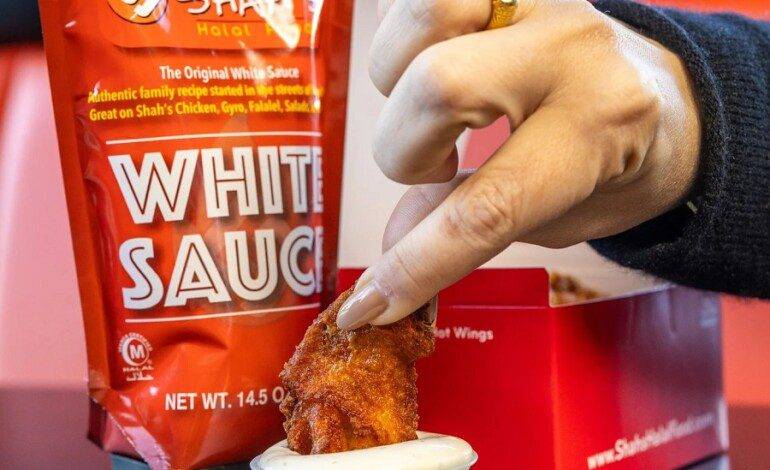
How White Sauce Complements Different Types of Kebabs

Kebabs are known for their spicy, grilled flavors, and white sauce is the main ingredient that balances them. The moment you taste a kebab with white sauce, the pairing hits you immediately.
The blend of smoky, marinated kebabs and the rich white sauce is what really makes the mix fantastic. Here, you learn why White Sauce for Kebab is an ideal companion for various kebab types and why it has gained so much popularity.
Why White Sauce Works So Well with Kebabs
Kebabs, by nature, are bold. Whether they are marinated in warm spices, cooked over an open flame, or packed with aromatics like garlic and onion, they carry strong flavors. White sauce provides balance. Here is the basic science of it:
- Fat meets acid. Grilled meats are rich and fatty. The acidity in white sauce, from lemon juice or vinegar, cuts through that richness and refreshes the palate between bites.
- Heat meets cool. Many kebabs include chili, pepper, or spice-heavy marinades. White sauce lowers the heat without dulling the flavor entirely.
- Dry meets creamy. Grilling naturally removes moisture. A sauce adds it back in a way that enhances rather than dilutes.
These are not just theoretical benefits. Anyone who regularly orders halal food with white sauce alongside their kebab plate has experienced this firsthand.
How It Pairs with Specific Kebab Types
White Sauce for Kebab works best with grilled and spiced kebab-style dishes by adding a cool, creamy balance to bold flavors. It pairs especially well with kofta kebab, where the sauce softens the spice and enhances the grilled taste without overpowering it.
The creamy texture also helps bring moisture to every bite, making the kebab feel more balanced and smooth. Across similar kebab-style preparations on the menu, white sauce adds contrast to smoky, seasoned meat while keeping the overall flavor light and enjoyable.
How Restaurants Use White Sauce to Build Signature Kebabs
White sauce is not just a side condiment in many restaurants; it often plays a key role in defining a kebab’s identity. In several food setups, especially street-style and fast-casual outlets, the white sauce becomes part of the “house signature condiment” that sets them apart from competitors.
- Used as a house “signature” element
- Sauce-to-meat ratio defines consistency
- Wraps are often built around the texture of the sauce
- Customers remember sauce more than seasoning
- Small changes create a distinct brand identity
Because of this, white sauce plays a key role in how kebabs are positioned, experienced, and remembered.
Regional and Street-Style Variations of White Sauce
Regional and street-style variations of white sauce show how widely this condiment changes across food cultures while still keeping its core role intact.
You’ll notice that white sauce isn’t a fixed recipe and often varies depending on where it is made or who prepares it.
- In some street food setups, it is garlic-heavy, giving a sharp, bold kick that pairs strongly with grilled kebabs
- In other versions, it is yogurt-forward, making it lighter, tangier, and more refreshing with spicy meats
- UK and US halal street food styles often adjust sweetness and thickness based on local taste preferences
- South Asian-inspired versions tend to focus more on yogurt balance and subtle seasoning rather than heavy creaminess
- Some variations include herbs like mint or parsley, adding freshness and changing the overall flavor profile
Because of these differences, white sauce lacks a fixed standard and continually evolves with regional tastes, ingredients, and street food culture.
White Sauce Beyond the Plate
It is worth noting that white sauce has moved well beyond kebab plates. The sauce now appears alongside grilled sandwiches, rice bowls, roasted vegetables, and even as a base spread on flatbreads.
Its versatility is part of what has made it a staple at halal food white sauce counters and restaurants across the country. Still, its home remains the kebab. That is where it was refined, where it makes the most sense, and where most people first encounter it.
Common Mistakes People Make When Pairing White Sauce with Kebabs
White sauce can really enhance kebabs when used properly, but a few common mistakes often reduce its impact. Instead of balancing flavors, it can end up overpowering or disrupting the dish if not handled carefully.
Paying attention to how much, what type, and when you use it makes a noticeable difference in the overall experience.
- Overusing white sauce can mask the smoky, grilled flavor of the kebab instead of enhancing it
- Choosing overly sweet or heavy versions can dull the spice and reduce flavor contrast
- Applying sauce too early in wraps or rolls can make the bread soggy and affect the texture
- Uneven spreading can lead to inconsistent bites, where some parts are too saucy and others too dry
- Treating white sauce as a main flavor instead of a balancing element reduces the role of the kebab itself
Wrapping Up
White sauce is not just a topping; it is a considered pairing. A white sauce not only balances the intensity of a spicy kebab but also, in a wrap-style kebab, acts as the glue that holds the filling together, adding moisture that makes it an integral and highly beloved part of the overall gastronomic experience.
Beyond pairing white sauce with kebabs, it spotlights other elements of a deeply satisfying meal, such as the role of sauces and the blending of individual ingredients. When you get a kebab next time, observe the meat and the sauce. Most probably, it is a lot more than you thought.