
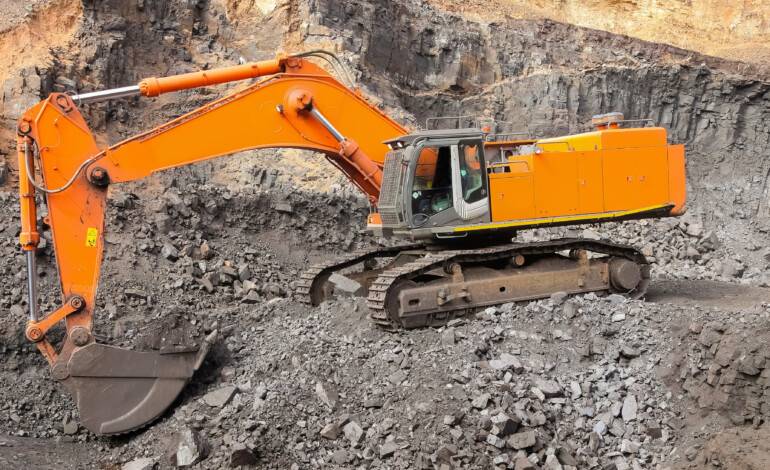
10 Ton Excavator Uses in Construction Work: Complete Guide

Construction projects often run into delays when contractors choose equipment that is either too small for the workload or too large for the available space. Finding the right balance between power, reach, and efficiency can significantly affect productivity and operating costs. On many job sites, a 10 ton excavator provides that balance by offering enough digging power for demanding tasks while remaining versatile enough for a wide range of construction environments. This combination makes it one of the most valuable pieces of earthmoving machinery used across civil, commercial, and residential projects.
Contractors frequently rely on this equipment because it can perform multiple tasks without requiring constant machine changes throughout the day.
Why Equipment Selection Impacts Project Costs
Every construction project operates under time and budget pressures. Equipment that struggles to handle site conditions often creates delays, increases fuel consumption, and raises labour costs.
A machine that is too small may require additional operating hours to complete excavation work. A machine that is too large may create access issues and increase transport expenses.
The 10-ton class sits in a practical middle ground. It offers strong hydraulic performance while remaining suitable for many sites where larger excavation equipment cannot operate efficiently.
This flexibility explains why contractors continue choosing these machines for infrastructure projects, subdivisions, and commercial developments.
Where a 10 Ton Excavator Delivers the Best Results
A 10 ton excavator performs well across a broad range of applications because it combines digging depth, lifting capacity, and attachment compatibility.
Many excavation contractors use these machines for:
- Residential developments and housing projects.
- Commercial site preparation work.
- Utility and drainage installations.
- Road and civil construction projects.
- Landscaping and earthmoving operations.
- Medium-scale demolition activities.
The ability to move between different project types increases equipment utilisation and improves overall return on investment.
10 Common Construction Tasks Handled by a 10 Ton Excavator
One reason these machines remain popular is their versatility. A single machine can often perform several tasks during the same project.
1. Site Preparation
Before construction begins, operators use excavators to remove vegetation, clear obstacles, and prepare building platforms.
2. Trench Excavation
Utility contractors regularly use excavators for trench excavation involving water, sewer, electrical, and communication services.
3. Foundation Digging
Accurate excavation supports stable foundations and structural integrity.
4. Drainage Works
Drainage projects often require precise excavation and grading around pipes and channels.
5. Material Handling
Excavators can lift and position construction materials when fitted with appropriate attachments.
6. Road Construction
Civil construction projects frequently involve excavation, grading, and site shaping.
7. Demolition Assistance
Many operators use hydraulic excavators for controlled demolition and debris removal.
8. Retaining Wall Preparation
Proper excavation helps ensure retaining walls remain stable and compliant.
9. Bulk Earthworks
Medium-sized earthmoving tasks often fall within the ideal operating range of these machines.
10. Landscaping Projects
Excavators support large-scale landscaping by shaping terrain and moving materials efficiently.
When a 10 Ton Machine Outperforms Smaller Equipment
Smaller excavators offer advantages in restricted spaces, though they often struggle when projects demand greater reach or lifting power.
A 10 ton excavator typically provides:
- Increased digging depth for larger excavations.
- Stronger breakout force for challenging ground conditions.
- Greater lifting capacity for heavy materials.
- Improved productivity on larger sites.
- Enhanced attachment compatibility.
These advantages help contractors complete projects more efficiently while maintaining flexibility across changing site conditions.
The machine often bridges the gap between compact excavators and larger construction machinery.
Combining Excavators With Other Site Machinery
Successful construction projects rarely depend on a single machine. Productivity improves when equipment works together as part of a coordinated workflow.
A typical equipment combination may include:
- Excavators for digging and material movement.
- Dump trucks for spoil removal.
- Rollers for compaction activities.
- Skid steers for site clean-up.
- Loaders for material transport.
This integrated approach reduces downtime and keeps projects moving efficiently.
Experienced site managers often select machinery combinations based on project size, access conditions, and production targets.
How Contractors Maximise Productivity on Site
Modern excavators support productivity through advanced hydraulic systems, attachment versatility, and efficient operating controls.
Contractors improve performance by:
- Matching bucket sizes to project requirements.
- Scheduling preventative maintenance regularly.
- Using trained heavy equipment operators.
- Selecting suitable attachments for each task.
- Planning efficient site access routes.
These strategies help reduce operating costs while improving project timelines.
Many contractors also combine excavators with track loader hire solutions when projects require additional material handling, site clean-up, or loading capabilities. This combination creates a highly productive workflow across diverse construction environments.
Conclusion
A 10 ton excavator remains one of the most versatile machines available for modern construction work. Its ability to handle trenching, site preparation, drainage projects, foundation excavation, demolition support, and earthmoving tasks makes it a valuable asset across numerous industries.
For contractors seeking a balance between power, mobility, and productivity, this machine class continues to deliver reliable performance on projects of varying size and complexity. Choosing the right equipment and supporting machinery can significantly improve efficiency while helping construction teams meet demanding project deadlines.